
The small cat with its paw raised has become one of the most recognizable symbols in the world. The Maneki Neko Collection fascinates not only lovers of Japanese culture but also everyone looking for decorations with deeper meaning. Behind the unassuming figurine lie centuries of tradition, philosophy, and craftsmanship.
The Japanese lucky cat is an object that has evolved over centuries from a simple ceramic doll to an icon of modern design. Every element of the figurine, from its color to its raised paw, carries a specific message rooted in the culture of the Land of the Rising Sun. Understanding this symbolism changes the way these unique objects are perceived.
Tradition and modernity rarely combine as naturally as they do with Maneki Neko figurines. Ceramic craftsmanship from two hundred years ago inspires interior designers, fashion creators, and collectors worldwide. It is no coincidence that the figurine of a cat with a raised paw has found its place in both Tokyo temples and minimalist European apartments.
How Japanese Beliefs from the Edo Period Shaped the Maneki Neko Figurine
The roots of Maneki Neko date back to the Edo period, specifically the years 1603–1868, when Japanese cities flourished with craftsmanship and trade. It was then, in the Imado district of Asakusa, that the first ceramic cat figurines began to be fired. The pottery tradition in this area has a long history, as suitable clay was discovered there as early as the Tensho era, around 1573.
Legends and Rituals from Which the Lucky Cat Tradition Grew
The origin of Maneki Neko is shrouded in two main legends. The first comes from the Gotoku-ji Temple in Tokyo. According to this legend, a cat there beckoned a traveler with its paw under its roof just before a violent storm, saving his life. The temple owner, seeing this as a sign, began to worship the cat as a symbol of prosperity.
The second legend is associated with an old woman from Imado. Forced to give up her beloved cat due to poverty, she heard its voice in a dream. The cat told her to sculpt ceramic figurines in its likeness and sell them at the temple gate. The figurines were immediately bought, and the woman escaped poverty.
The legends from the Edo period show that Maneki Neko was more than just a decoration from the very beginning. The figurine embodied the Japanese belief in the benevolent power of animals, respect for craftsmanship, and a deep-seated hope for a better future. The rituals associated with the lucky cat have survived to this day, and the Gotoku-ji Temple continues to attract pilgrims who leave ceramic figurines as votive offerings.
From Imado Kilns to Seto Workshops: The Ceramic Craftsmanship of the Figurines
The earliest documented Maneki Neko figurines were made from Imado clay, a local material from Asakusa. These were simple, low-fired objects with a modest form. Potters from Mikawa province, who settled in Imado during the Edo period, gave the products a more refined character.
By the end of the 19th century, the popularity of cat figurines spread throughout Japan. Ceramic workshops in Seto, one of the country’s largest pottery centers, took over production on a larger scale. The use of plaster molds allowed for faster and cheaper creation of figurines without losing their symbolic expression.
Seto ceramics are still considered a benchmark of quality in the production of traditional figurines. Products from this region are characterized by a smooth glaze, precise details, and vibrant colors that capture the richness of Japanese aesthetics. The difference between Imado and Seto products lies mainly in the material and firing technique, as shown in the table below.
| Feature | Imado Ware | Seto Ware |
|---|---|---|
| Material | Local earthenware clay | Fine stoneware |
| Technique | Hand-forming, low firing | Plaster molds, high firing |
| Finish | Unglazed, matte | Glazed, glossy |
| Peak Period | Late Edo (18th–19th centuries) | Meiji Era and later |
| Character | Folk, simple | Precise, ornate |
Both pottery centers left a lasting mark on the history of Japanese ceramic craftsmanship. Their legacy forms the foundation upon which contemporary designers build new interpretations of the classic figurine.
The Symbolism of the Raised Paw and Maneki Neko’s Role as a Talisman
The raised paw is the most important element of any figurine. This gesture is read in Japanese as “maneki,” meaning “beckoning.” The cat literally invites luck, guests, or money to itself, depending on the context and interpretation.
As a talisman bringing good fortune, Maneki Neko has held a place of honor for centuries at the entrances of shops, restaurants, and homes. Japanese people believed that the figurine acted as a kind of portal for positive energies. This custom has survived to this day and is known not only in Japan but all over the world.
What the Colors and Accessories of Maneki Neko Mean in Japanese Symbolism
Each Maneki Neko figurine is a precisely constructed system of meanings. The color, raised paw, size, and accessories together create a coherent symbolic message. Nothing in this imagery is accidental, as Japanese culture has attributed specific values to colors and gestures for centuries.
The color symbolism of the lucky cat stems from the syncretism of Buddhist and Shinto beliefs. Over time, the color palette expanded, responding to the increasingly diverse needs of adherents and collectors.
White, Black, Gold, and Other Colors: The Meaning of Each Shade of the Figurine
The color of the figurine is the first and most important symbolic message. The white Maneki Neko is the most common pattern and symbolizes purity, innocence, and the influx of positive thoughts. The white lucky cat is believed to promote general well-being.
The gold Maneki Neko attracts wealth and financial prosperity. It is particularly popular in business and commercial circles. The black figurine, in turn, acts protectively, warding off evil spirits and negative energies.
The colors of the figurines and their meanings:
- White symbolizes purity and the influx of positive events
- Gold attracts wealth and financial success
- Black protects the home and wards off negative energies
- Red wards off illness and strengthens health
- Pink promotes love and happiness in relationships
- Green aids in learning and improves health
Each color corresponds to a different area of life, which is why collectors often gather several figurines of different colors. Combining colors in one place is meant to enhance their combined effect and create a space full of harmony.
Left or Right Paw: How Beckoning Luck Differs from Beckoning Wealth
The raised right paw symbolizes beckoning money and material prosperity. A figurine with a right paw is most often placed in places related to trade and finance.
The left paw, on the other hand, invites people, meaning customers, guests, and loved ones. It is this version of the cat that can be seen at the entrances of restaurants and hotels. The choice between the left and right paw is a decision worth considering before purchasing a figurine.
There are figurines with both paws raised simultaneously. They are believed to bring both good luck and wealth. However, Japanese traditionalists point out that two raised paws can also symbolize someone asking for help, which is not always interpreted positively.
Koban coin, bell, and bib: which attributes enhance the talisman
Each accessory on the figurine serves a specific symbolic function. The koban coin is a round gold coin from the Edo period, often depicted with an inscription meaning ten million ryō. Its presence on the figurine clearly indicates the intention of attracting wealth.
The small bell hanging around the cat’s neck symbolizes protection against evil spirits. In Japanese tradition, the sound of a bell repels negative forces and summons deities. The bib refers to the attire of cats revered in temples and emphasizes the sacred nature of the figurine.
Attributes of the Maneki Neko figurine:
- Koban coin, attracts wealth and prosperity
- Bell, repels evil spirits and summons protection
- Bib, emphasizes the character of a temple talisman
- Fan, symbolizes prosperity and happiness in life
- Flowers, signify prosperity and vitality
Figurines without any accessories are the most classic version, rooted in the original Imado aesthetic. Modern designs often forgo bibs and bells in favor of a clean form, retaining only the coins or a bare cat silhouette.
The tricolor Maneki Neko as the rarest and luckiest variant
The tricolor Maneki Neko, called mi-ke, combines white, ginger, and black fur. The pattern refers to the coat of naturally tricolor cats, which have been considered exceptionally lucky in Japan for centuries.
Domestic tricolor cats with this color combination are genetically almost always female, which made them a rarity. In Japan, this pattern is attributed the highest degree of good fortune, combining luck, wealth, and prosperity simultaneously.
How modern design reinterprets the classic Japanese good luck cat pattern
Maneki Neko figurines have come a long way from simple Imado ceramics to designer objects from modern art galleries. The process of this transformation began in earnest in the second half of the 20th century, when the Japanese wabi-sabi aesthetic and the philosophy of minimalism began to inspire designers worldwide.
Japandi style and minimalism: Maneki Neko in the aesthetic of contemporary interiors
The Japandi style, a combination of Japanese simplicity and Scandinavian minimalism, has created a natural environment for modern Maneki Neko figurines. A muted color palette, natural materials, and limiting decorations to elements carrying meaning are characteristics of both Japandi style and traditional talismans.
Maneki Neko in the Japandi style often shies away from the bright colors of traditional figurines. Designers propose versions in shades of gray, white, and beige, which blend perfectly into minimalist spaces. Such a reinterpretation does not destroy the symbol’s meaning but adapts its form to contemporary aesthetics.
The wabi-sabi philosophy, which celebrates imperfection and impermanence, is reflected in figurines with intentionally simplified forms. Matte finishes, subtle flaws, and organic shapes make a modern lucky cat figurine appear as an object with a long history, rather than a mass-produced item.
From Ceramics to New Materials: The Evolution of Collectible Figurine Forms
Traditional ceramics were long the sole material for making figurines. It wasn’t until the 20th century that experimentation with resin, porcelain, wood, metal, and glass began. Each material imparts a different character to the figurine and opens up new aesthetic possibilities.
Polyurethane resin allows for precise detail reproduction and gives the figurine a silky smoothness. Porcelain brings elegance and delicacy. Wood, on the other hand, harmonizes with the Japandi style and evokes Japanese woodworking traditions.
Before purchasing a collectible figurine, check if it has a “Made in Japan” label or artisan documentation. Original ceramic products from Seto differ from mass-produced replicas in clay density and glazing techniques.
Maneki Neko in Fashion, Pop Culture, and Interior Design
Maneki Neko has long transcended interior decoration. The motif of a cat with a raised paw appears on fabrics, jewelry, tattoos, and bags. Japanese streetwear brands have been incorporating this symbol into recognizable collections for years.
In pop culture, the figurine has become an icon of East Asia. It appears in cartoons, video games, and films, not necessarily in a Japanese context. Maneki Neko’s popularity in global culture testifies to the power of its simple yet clear symbolism.
Brands focused on Japanese aesthetics, like the Polish company Matiere47, which creates, among other things, scented candles inspired by Japanese symbols, use the image of the lucky cat to build a narrative that combines ritual with everyday decoration. This is an example of how traditional Japanese iconography permeates contemporary, high-quality products.
Tip: When decorating in the Japandi style, choose a Maneki Neko figurine in a neutral color or one that matches your wall palette. A single figurine as a decorative focal point works better than several different designs at once.
Unique Silver Jewelry at the Matiere47 Studio
Matiere47 is a Polish jewelry brand operating since 2017, whose products are entirely crafted by experienced artisans. Each project undergoes a full production cycle, from the initial sketch, through casting, to manual finishing. The base material is recycled 925 sterling silver, which gives the brand a distinct character of responsible craftsmanship.
The studio is located in Old Żoliborz and combines the classic jewelry school with modern design using 3D technology and precise jewelry wax milling. The result is jewelry where tradition meets the precision of contemporary manufacturing methods.
Jewelry Collections with Japanese and Astrological Symbolism
Matiere47 creates thematic collections where each item carries a specific meaning. Two of them particularly attract the attention of symbolism and Japanese aesthetic enthusiasts.
Types of collections available at Matiere47:
- Zodiac Sign Jewelry featuring silver pendants, necklaces, and bracelets inspired by astrological symbols
- Lucky Cat Jewelry inspired by the Japanese lucky cat Maneki Neko, including necklaces and bracelets with a golden cat motif
The silver jewelry from the Lucky Cat collection directly references the symbolism described in the article. The Japanese cat with its raised paw and koban coin has become the inspiration for subtle jewelry designs that work well as both everyday accessories and meaningful gifts.




Scented Candles and Showroom Space
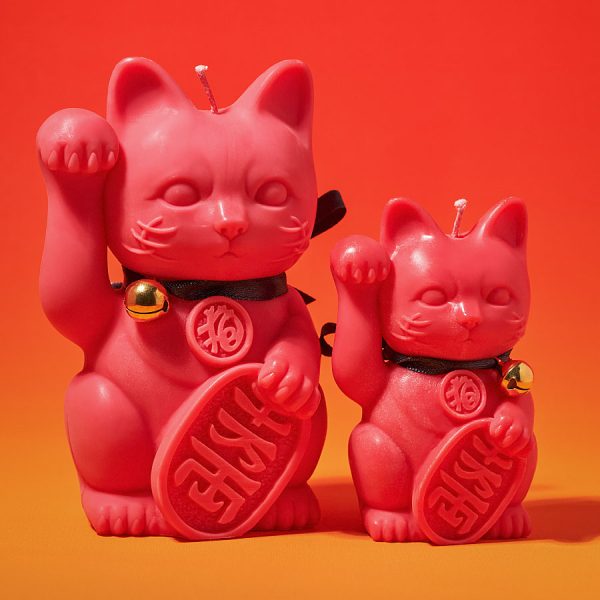
Matiere47’s offerings extend beyond jewelry. The collections also include scented candles with the Maneki Neko motif, which combine Japanese iconography with aromatherapy. Natural waxes and carefully selected fragrance compositions make these candles a complete interior decor element.
All products can be viewed in person during a visit to the Matiere47 showroom, by appointment only. The studio also accepts custom orders for engagement rings, wedding bands, and personalized family heirlooms.
Those interested in a specific design or seeking advice on jewelry selection are invited to contact us via the Matiere47 contact form. The studio team will gladly assist in choosing the right design or preparing a unique order for a special occasion.
How to Build a Maneki Neko Collection Combining Originality with Tradition
Building a collection of Maneki Neko figurines is more than just gathering items. It is a conscious accumulation of objects that tell a story of culture, craftsmanship, and aesthetics. A good collection combines different eras, styles, and techniques, creating a cohesive visual narrative.
Features Distinguishing Hand-Painted Figurines from Mass Production
The difference between a hand-painted figurine and a mass-produced item is noticeable at first glance. Hand-painting leaves subtle brushstroke variations, delicate color transitions, and minor differences between individual pieces. It is precisely these imperfections that give the figurine its authentic character.
Mass-produced replicas are characterized by identical paintwork, perfectly even lines, and the absence of any signs of human intervention. They also differ in material composition, as cheap figurines are made from lightweight resin or plastic, not ceramic.
How to distinguish an original figurine from a replica:
- Weight — ceramic is significantly heavier than plastic or resin
- Texture — original glaze has visible depth and subtle inclusions
- Paintwork — manual work leaves unique brushstroke marks
- Markings — figurines from Japanese manufacturers have stamps or prints on the bottom
- Glaze color — the original shade is deeper and less garish
Collecting ceramic Maneki Neko figurines from different regions of Japan allows you to trace the evolution of craftsmanship. An example from Seto differs in character from figurines from other pottery centers, giving the collection an educational dimension.
How to choose Maneki Neko to match interior style and space purpose
The selection of a figurine should begin with determining its intended placement. A gold or white Maneki Neko with a raised right paw is best suited for a business space. For a home living room, a white or tricolor design would be more appropriate, especially if the well-being of all household members is a priority.
The interior style also strongly influences the choice of form. In a Japandi-style apartment, a figurine with a matte finish and subdued colors would be suitable. In a more eclectic arrangement, you can opt for a bright, gold specimen with rich decoration.
Tip: A Maneki Neko figurine is traditionally placed near the entrance to a room or in its left corner when viewed from the door. This position, in line with the Japanese belief in energy flow, is intended to enhance the talisman’s effect and harmonize the space.
FAQ: Frequently Asked Questions
What does the name Maneki Neko mean and where does this figurine originate from?
Maneki Neko comes from the Japanese language and literally means “beckoning cat.” The figurine originated in Japan during the Edo period, between the 17th and 19th centuries. The earliest examples were made in the Imado district of Tokyo, where potters molded them from local terracotta clay.
The Japanese lucky cat quickly became a popular talisman in shops and temples. Two legends explain its origin. One links the figurine to the Gotoku-ji temple, where a cat with a gesture of its paw saved a traveler from a storm. The other tells of a poor woman from Imado who began selling ceramic figurines and rose out of poverty.
What is the significance of the colors and gestures of the Maneki Neko figurine?
The symbolism of Maneki Neko colors is precisely defined by Japanese tradition. A white figurine signifies purity and general good fortune. Gold color attracts wealth and financial success. A black specimen serves a protective function and repels negative energies. Red supports health and wards off illness.
The gesture of the raised paw also has a specific meaning. The right raised paw attracts money and material prosperity, which is why it is often found near cash registers and shop counters. The left paw invites people and customers, and a figurine with such a gesture is placed at the entrances to service establishments and restaurants.
Where is the best place to position a Maneki Neko figurine at home or in a business?
Japanese tradition indicates that Maneki Neko at home should be placed near the entrance, with its face turned towards the door. This position symbolizes actively inviting good fortune into the living space. The figurine should be placed in a clean, bright, and easily visible location.
Avoiding dark corners and cluttered rooms is recommended, as stagnant energy weakens the talisman’s effectiveness. In a business setting, the lucky cat figurine works best at the cash register or in a shop window. Classic feng shui recommendations point to the southeast corner of a room as a particularly auspicious location for good energies.
What distinguishes original Maneki Neko figurines from mass-produced replicas?
Original Maneki Neko figurines from Japanese ceramic workshops, especially from Seto, are distinguished by the depth of their glaze, the precision of their painting, and the characteristic weight of the ceramic. Hand-painted pieces show subtle brushstrokes and unique color transitions between individual elements. Mass-produced replicas made of resin or plastic have an identical finish without any signs of handcraftsmanship.
The original can be identified by several features. High-quality ceramic is noticeably heavier than plastic. Authentic figurines from Japanese workshops often have stamps or prints on the bottom confirming their origin. Collectors seeking valuable pieces primarily opt for items with a documented artisanal history and ceramic material.
Summary
The Maneki Neko collection is a phenomenon that appeals to both lovers of Japanese tradition and fans of modern design. The figurine of the cat with a raised paw has journeyed from ceramic products from Imado kilns, through Seto workshops, to contemporary design studios worldwide. Each stage of this journey has enriched its form without erasing its deep symbolic meaning.
The Japanese lucky cat combines what we seek in everyday objects: aesthetics, meaning, and history. By understanding the colors, attributes, and traditions behind each figurine, one can build a conscious collection that not only adorns a space but also tells a cohesive, fascinating story.
Sources:
- https://en.wikipedia.org/wiki/Maneki-neko
- https://pl.wikipedia.org/wiki/Maneki-neko
- https://pl.wikipedia.org/wiki/G%C5%8Dtoku-ji
- https://ceramicartsnetwork.org/ceramics-monthly/ceramics-monthly-article/clay-culture-maneki-neko
- https://ceramics.org/ceramic-tech-today/video-beckon-in-a-fall-of-good-fortune-with-japanese-maneki-neko/
- https://asia.si.edu/research/publications/seto-and-mino-ceramics/
- https://www.sfomuseum.org/exhibitions/maneki-neko-japans-beckoning-cat
- https://japonia-online.pl/komu-macha-maneki-neko-krotko-o-jednym-z-najpopularniejszych-japonskich-kotow/
- https://podroze.onet.pl/ciekawe/prawdziwe-znaczenie-azjatyckiego-kota-machajacego-lapka/wyh3t2e